What I Learned Building a SaaS Platform in a Weekend
 ·
·
2 min read
·
·
2 min read

Last month I built a full-featured SaaS platform in about 48 hours. Not a landing page. A working application with auth, multi-tenant data isolation, Stripe billing, and a dozen functional modules.
Here's what made that possible, and what I'd do differently.
The Stack Matters Less Than You Think
Go backend, SvelteKit frontend, PostgreSQL, Docker. Nothing exotic. Just tools I know cold.
The speed didn't come from the stack. It came from muscle memory around architecture decisions. Every handler follows the same shape. Every query hits the same connection pool. Every error response uses the same format. When you stop making structural decisions, you're just cranking out features.
AI-Assisted Development Is Real
I used AI code generation heavily, but probably not the way you're imagining. I never asked it to "build me an app." I gave it tight, specific tasks: "Write a Go handler that creates a group with these fields, validates input, returns the created object." Then I reviewed it, tweaked it, and wired it in.
The loop was always: I architect, AI implements, I review. When you trust your architecture and the AI knows your patterns, that loop is incredibly fast.
Multi-Tenancy From Day One
This is the hill I'll die on. If you're building SaaS, tenant isolation goes in at the foundation. Not bolted on later. Every query includes a tenant ID. Every endpoint validates that the user belongs to the right tenant. Every seed record is scoped.
It adds maybe 10% to initial dev time. Retrofitting it later is a rewrite.
Seed Data Is Your Secret Weapon
Before showing this to anyone, I wrote scripts that filled a demo environment with realistic data. Real names, plausible dates, actual relationships between records. Not "Test User 1."
When prospects see a populated app, they can picture their own data in it. An empty form is abstract. A dashboard full of realistic numbers is tangible. That seed data probably did more for early conversations than any feature.
What I'd Do Differently
I moved too fast on a few modules and introduced bugs that took longer to fix than they would've taken to prevent. Specifically, I should have written integration tests for the tenant boundaries sooner. I found a cross-tenant data leak in a group endpoint that would've been embarrassing in a live demo.
Speed is great. Speed without guardrails on security boundaries is reckless.
The Takeaway
The barrier to building software has never been lower. Better tools, real AI assistance, essentially free deployment. But the barrier to building good software hasn't changed. You still need taste, architectural discipline, and the willingness to slow down where it counts.
Ship fast. But ship right.
Keep Reading
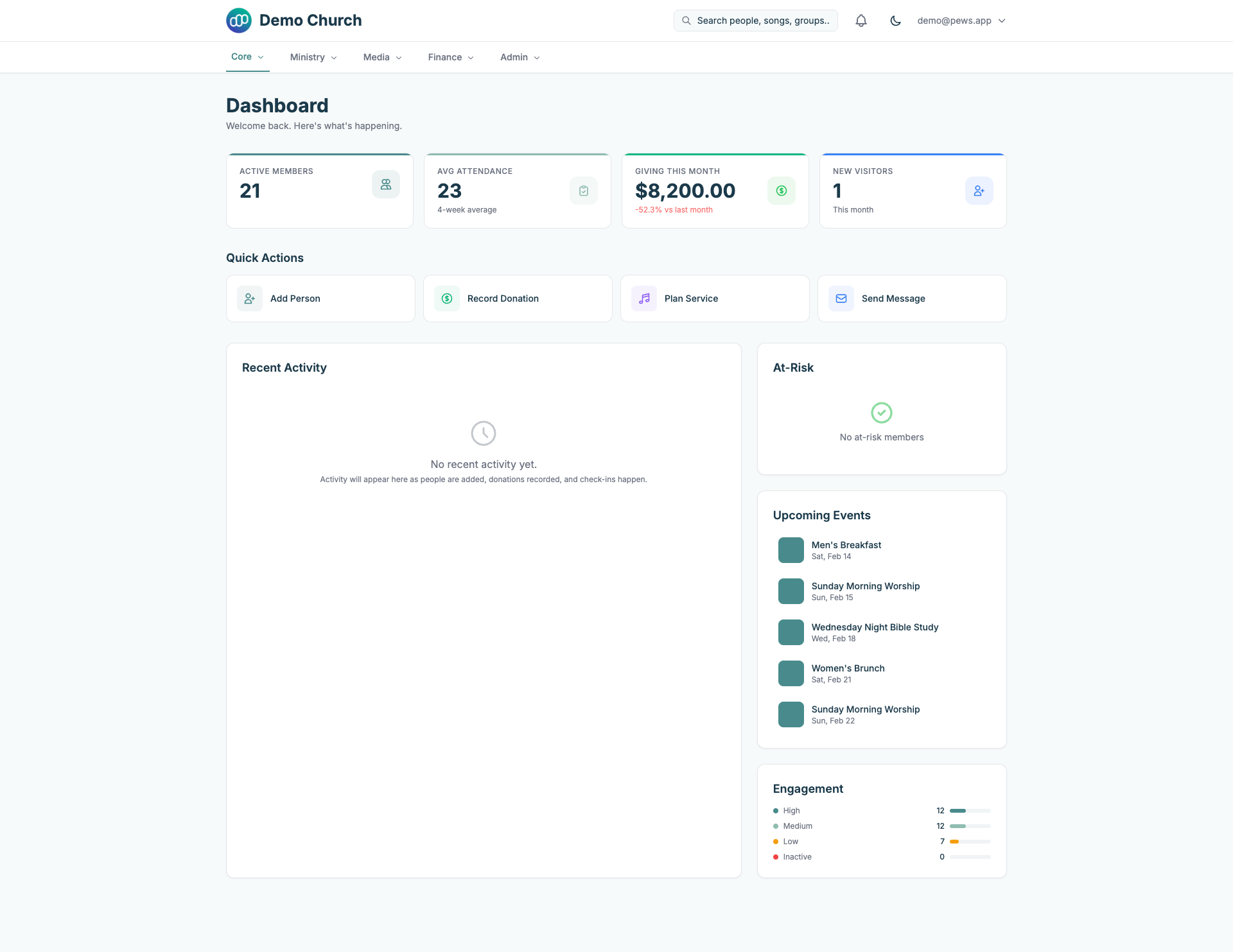
Why I Built a $100/Month Planning Center Alternative
Small churches deserve real management software without the $200/month price tag. So I built one.

test
I built a full church management platform in 48 hours using AI agents. 80+ Claude runs, 12,000 lines of code, zero team. Here's the playbook.
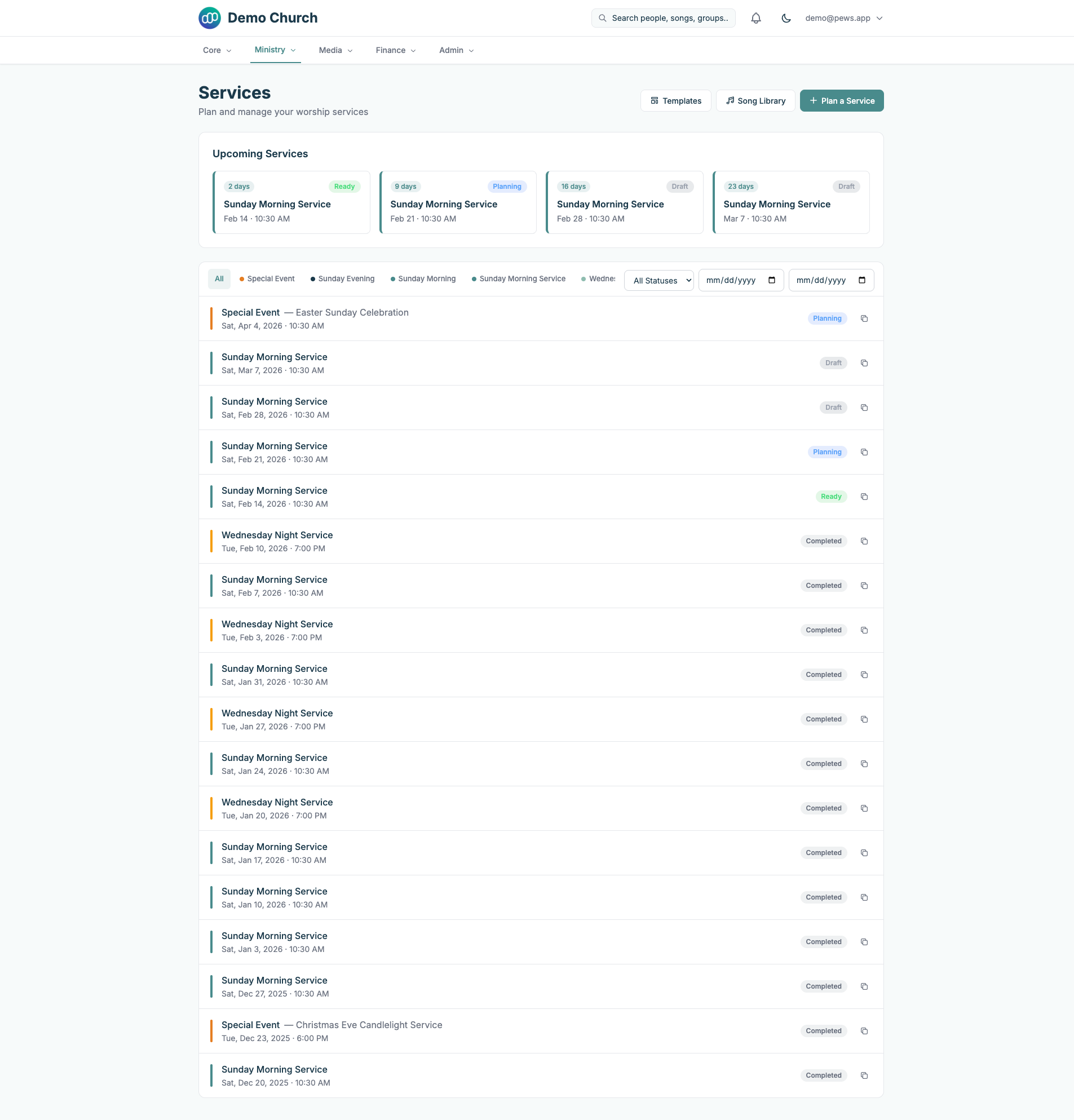
Church Management Software in 2026: An Honest Comparison
An honest look at Planning Center, Breeze, Tithely, and the newer options. Which church management platform actually fits your church?